Saturday, June 9, 2007

Lack of response from some editors…

I’m still waiting on a response from editors on a number of query letters that I’ve sent out over the past few months.

Maybe this explains why...

cartoon from www.weblogcartoons.com

Cartoon by Dave Walker. Find more cartoons you can freely re-use on your blog at We Blog Cartoons.

Thursday, June 7, 2007

Granny J from 'Walking Prescott’ talks…

Remember Granny J over at Walking Prescott ?

She walks around town most days, snapping photographs of the interesting, the unique, and the plain ordinary that is Prescott and posts on her blog.

The photos are brilliant and she was the inspiration for my Christchurch Tour Guide blog. It’s going to take some time for me to develop a visual blog anywhere near as good as Granny J’s but I’ll try….

Well, it seems that Prescott has a thriving blog community and they met up for a Blog Fest. The local radio station got wind of it and they put together a series of interviews with the local bloggers.

Here’s Granny J's interview. Have a listen to what she has to say about Prescott and blogging….

Tuesday, June 5, 2007

Interview with a Travel Writer...Mike Gerrard.


Today we’re talking with Mike Gerrard, British travel writer and photographer. Mike has published in newspapers around the world, including The Washington Post, The Times, and the Daily Express plus magazines such as CNN Traveller, Wanderlust, and Real Holidays and online at Suite101.

Mike is also the author or contributing author to over 20 guide books such as the Rugby World Cup 2007: Official Travel Guide, National Geographic Traveler Guide to Greece (2001, 2004) and Colours of Paris (2005).

Hi Mike and welcome to My Year of Getting Published. I'm glad you were able to stop by and share your thoughts on travel writing.

1. Did you always want to be a writer? How did you get started in writing?

Ever since the age of about eight or nine, when I realised that there were actually people called writers, who wrote scripts and books and things. My dad was a part-time writer, and from a very early age I was fascinated by his typewriter and used to love playing with it. So it's probably in the genes.

2. What do you consider your first "break" as a travel writer?

Selling my first travel piece to the Daily Telegraph in London. It was the first travel article I'd ever written. I'd been writing about computers and doing general journalism up till then. I was always interested in travel and travel writing, but whenever I met anyone who'd done it, or tried it, they always told me how difficult and competitive it was, and really put me off having a go.

The Travel Editor at the Telegraph then was Bernice Davison, and she was incredibly helpful and supportive, in ways that I think few travel editors are these days. Maybe they just don't have the time any more, but Bernice would always respond with a note when I sent something in, and told me how to go about getting commissions and setting up trips and so on. She was terrific.

3. What advice would you give to someone who is considering going into travel writing? Any tips to breaking into newspapers and magazines?

I used to try to give lengthy answers to questions like this, but a travel writer friend of mine told me what he said to people, which seemed to sum it up. It was: travel a lot, write a lot, and send it in. It really does come down to that. If you're good, it should be noticed.

Eventually.

You also need an amazing persistence and an ability to absorb rejections, or complete lack of responses, without taking it personally.

4. What do you see as the future for travel writers in the printed media and online ?

I think the future is online. In the printed media I've seen it get harder and harder for people who have been good, successful travel writers for a long time to get commissions. Today lots of publications want celebrities to do stuff for them, and they want lists of the Top Ten this, and the Best Beaches and so on. Very few want real writing any more.

Mind you, working for the online media is even further away from real writing, but I think that's where people have to look.


5. As a writer and traveler, what are the biggest challenges you face on the road ?

Someone who once came on one of my travel writing courses, Tony Kelly, who is now a good friend and a very successful travel writer himself, explained this, I think. After he'd been writing himself for a few years, he said to me that there was something I hadn't warned them about on my course, which was that once you become a travel writer, you can never have a holiday again.

There's a lot of truth in that.
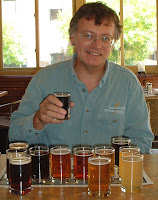

You're always taking notes, just in case, making sure you've got photos and leaflets and opening hours and things. Working trips are very tiring, which people don't realise.

Last year I worked with my wife on the Official Travel Guide to the 2007 Rugby World Cup. We did one trip to southern France to go round most of the venue cities there, and we were away for 5 weeks. Apart from the last couple of days, we had no time to relax at all. It's tiring, working 30+ days in a row, in the heat, tramping round museums and hotels, spending your evening planning the next day and downloading photos and burning DVDs to back them up. We were reviewing every restaurant we ate in, so even at mealtimes the notebook was out and you're 'on duty'.

6. Finally, what is your favorite place and why ?

Home. It's the only place I do have a chance to switch off, for the occasional weekend when we're not working.

.........

(note from Liz: Mike has also written a how to book for aspiring Travel Writers called ‘So You Want to be a Travel Writer?’, providing information on how to break into the British travel market.)

........
Previous Interviews:
Heather Hapeta
Thomas Swick
Leif Pettersen
Rolf Potts
Ian Mackenzie
Sheila Scarborough
Graham Reid
Candy Harrington
Terah Shelton
Rudy Maxa
Shannon Hurst Lane
Wendy Perrin
David Whitley

Sunday, June 3, 2007

Head to Gadling.com for reviews of travel books…

Want to know what’s worth reading in the world of travel guides and travel books ?

One of the best places to go is the book section of Gadling.com (the traveler’s web log). There are over 200 posts related to book reviews, interviews, book festivals, articles, bookstores, author talks, and anything else related to travel.

But be warned…you’ll end up with a list of books that you just have to read…

Here’s a few of the book reviews that caught my eye….


Paris by Pastry (Stalking the Sweet Life)

Assassination Vacation

The Heart of the World: A Journey to the last secret place

Change Your Life Through Travel


I can see a trip to Borders or Amazon.com in my future…

Saturday, June 2, 2007

The 10 Sins of Travel Writing…

Most writing articles talk about what you should do to create great articles. But it’s just as important to know what not to do, as Thomas Swick (editor, South Florida Sun Sentinel) points out in his ‘10 Sins of Travel Writing.’

1. All travel stories sound the same.
To stand out from the crowd, your story must have a personal voice and a point of view. This does not necessarily mean writing in the first person, though that is often the easiest way to achieve these elements. Remember that almost any place you write about has been written about before; your challenge is to find something new and original to say about it. And, since every person is unique, the best way to do this is to examine your own individual reaction to a place. What about it struck you, amused you, depressed you, intrigues you, moved you?

2. They are riddled with clichés.
Avoid the “land of contrasts” school of writing - “best-kept secrets” that “pulsing with.” Again, find a more creative way of saying things.

3. They tell instead of show.
Don’t tell readers the people are friendly; show them this through an anecdote. Likewise, don’t say that city, harbor, etc. is beautiful; describe it in such a way - with well-observed details - that we see that it is.

4. They try to cover too much.
Don’t try to squeeze every aspect of a city or country into your story. Often a well-chosen (and well-described) vignette conveys a better feel for a place than a broad overview.

5. They gush.
Bad writers pick up on all the predictable things and, in hopes of elevating them to a grander status, write noisily about them. Good writers notice the unexpected things and present them calmly, without fuss.

6. They ignore the people.
Doctors are accused of treated diseases, not people. Travel writers suffer from the same cold, clinical approach. If you go anywhere for a story and don’t make contact with at least one local - of you don’t, as Forster said, “connect” - you have failed. For how can you ever hope to understand a place without talking to the people who live there? Dialogue helps a travel story immeasurably, but so few writers include it.

7. They are superficial.
Most travel stories just scratch the surface. It is not enough to describe a place, you must try to understand it and pass on that understanding in your writing.

8. They are humorless.
Travel - the displacement from the familiar to the foreign - is rich in comedy, but rarely do I get a story that makes me laugh.

9. They lack continuity.
A good travel story is more than just a collection of random impressions; it has a definite theme. Decide at the beginning what point you want to get across about the place and then work your impressions around it. Don’t simply write an article, but tell a story. (This is where the people come in handy.)

10. They fail to enchant.
So few of the travel stories written, and published, these days convey any sense of the wonder of travel. They are dry compilations of information relieved, so their authors think, by “cute” leads of unbearable triteness. Yet a travel story, in the right hands can have the narrative flow of a short story, the elegance of poetry, the discursiveness of an essay and the substance of a history lesson.
...........

Note from Liz: Thanks to Thomas Swick to letting me reprint this and also to Shannon Hurst Lane to bringing it to my attention. I‘ll be putting a copy of this on the wall in front of the computer to remind me of travel writing sins to avoid…

Friday, June 1, 2007

The Smithsonian magazine editor talks…

Mr Media, aka Bob Andelman, has just posted an interview with Smithsonian editor Carey Winfrey.

This is well worth reading if you’re considering pitching to the Smithsonian magazine.

Carey Winfrey talks about what qualifies a story as something the Smithsonian magazine would be interested in, what doesn’t, and how important it is to get the right balance.

When you're competing with over 4,000 other article pitches a year, this is important stuff to know...